

For patients in Zimbabwe living with obesity and its related health conditions, weight loss (bariatric) surgery may become an appropriate option when diet, exercise, and medical treatment have not achieved sufficient or lasting results. India offers a range of bariatric surgical procedures, performed laparoscopically by dedicated bariatric surgical teams with structured pre- and post-operative support programmes.
For a patient travelling from Zimbabwe, the important question is not simply “Can this be done in India?” The more useful questions are: Do I actually meet the criteria for weight loss surgery? Which specific procedure is most appropriate for my health profile and goals? What are the risks? What long-term lifestyle and nutritional changes will be required? And when will I be fit enough to make the journey back to Zimbabwe? This guide explains the clinical aspects of obesity and weight loss surgery in India from the perspective of Zimbabwe patients.
Understanding Weight Loss Surgery
01What Is Obesity and Weight Loss Surgery?
Bariatric (weight loss) surgery covers a group of procedures that alter the digestive system to help patients with obesity achieve significant, sustained weight loss, generally by restricting the amount of food the stomach can hold, altering digestion, or both. These procedures are recommended for appropriately selected patients with a body mass index (BMI) above certain thresholds, particularly when obesity is accompanied by related conditions such as type 2 diabetes, high blood pressure, or sleep apnoea. Weight loss surgery is not a stand-alone treatment; it requires lifelong changes in diet, physical activity, and, for some procedures, nutritional supplementation.
02Common Reasons Zimbabwe Patients Consider Weight Loss Surgery in India
- Severe Obesity (Class II or III). Patients with a significantly elevated BMI who have not achieved sufficient weight loss through non-surgical methods.
- Obesity with Type 2 Diabetes. Weight loss surgery can significantly improve or, in some cases, resolve type 2 diabetes in appropriately selected patients.
- Obesity with High Blood Pressure. Significant weight loss can improve blood pressure control.
- Obesity with Obstructive Sleep Apnoea. Weight loss surgery can improve or resolve sleep apnoea in many patients.
- Obesity with Joint Problems. Excess weight places additional strain on weight-bearing joints; weight loss may improve symptoms and function.
- Obesity with Fatty Liver Disease. Weight loss surgery can improve liver health in patients with obesity-related fatty liver disease.
03Does Every Condition Need Surgery?
No. This is one of the most important principles for a Zimbabwe patient considering travelling overseas. Depending on the individual case, appropriate treatment may include:
- Structured diet and exercise programmes without surgery for patients who do not meet surgical criteria
- Medical weight loss treatment, including newer weight loss medications, instead of or before surgery
- Treatment of an underlying medical or hormonal cause of weight gain
- Postponing surgery until a medical condition affecting surgical safety is optimised
Not every patient seeking weight loss requires surgery, and not every patient requesting a specific procedure meets the recognised criteria. A bariatric surgeon and multidisciplinary team should confirm eligibility based on BMI, related health conditions, and previous weight loss attempts before recommending surgery.
Zimbabwe patients get the best results from weight loss surgery when they understand it as the start of a long-term lifestyle change programme, not a single procedure that does all the work on its own.
04When May Surgery Be Recommended?
- BMI meets recognised thresholds for bariatric surgery, generally with or without obesity-related health conditions depending on the specific threshold
- Previous structured attempts at weight loss through diet, exercise, or medical treatment have not achieved sufficient or lasting results
- The patient has been assessed as medically and psychologically ready for the lifestyle changes required after surgery
- The patient understands and accepts the need for lifelong dietary changes and, for some procedures, nutritional supplementation
05Warning Signs Zimbabwe Patients Should Not Ignore After Surgery in India
- Severe abdominal pain after surgery
- Persistent vomiting
- Signs of infection (fever, wound redness or discharge)
- Difficulty breathing or chest pain (which can indicate a blood clot)
- Signs of significant bleeding
- Severe or persistent dehydration
A patient with severe abdominal pain, persistent vomiting, difficulty breathing, or chest pain after weight loss surgery should seek immediate local emergency care in Zimbabwe rather than delaying to arrange overseas follow-up.
06Tests Usually Required Before Weight Loss Surgery
- Comprehensive Medical Evaluation. Assesses obesity-related health conditions and overall fitness for surgery and anaesthesia.
- Endoscopy. Examines the stomach and oesophagus before surgery to check for conditions that may affect the surgical plan.
- Nutritional and Metabolic Assessment. Establishes a baseline and identifies any existing nutritional deficiencies.
- Psychological Evaluation. Assesses readiness for the significant lifestyle changes required after surgery.
- Cardiac and Sleep Studies. Assess for obesity-related heart and breathing conditions relevant to surgical and anaesthesia risk.
Procedures, Techniques and Risks
07Major Types of Weight Loss Surgery Available in India
- Sleeve Gastrectomy. The stomach is reduced to a smaller, tube-shaped pouch, limiting food intake; currently one of the most commonly performed bariatric procedures.
- Gastric Bypass (Roux-en-Y). The stomach is divided and reconnected to bypass part of the small intestine, both restricting food intake and altering digestion.
- Mini Gastric Bypass (One-Anastomosis Gastric Bypass). A variation of gastric bypass surgery with a different reconstruction technique.
- Adjustable Gastric Banding. A band is placed around the upper stomach to restrict food intake; less commonly performed than in the past due to comparative long-term outcomes.
- Revision Bariatric Surgery. Surgery to modify or convert a previous weight loss procedure that has not achieved or maintained sufficient weight loss.
08Laparoscopic Bariatric Surgery
The great majority of bariatric procedures in India are performed laparoscopically, through several small incisions rather than a single large incision, which is generally associated with reduced pain and faster recovery compared with open surgery. Open surgery may still be necessary in complex or revision cases.
09Multidisciplinary Bariatric Programmes
Advanced Indian bariatric centres typically combine surgery with dietitian support, psychological assessment, and structured long-term follow-up programmes, since the success of weight loss surgery depends heavily on post-surgical lifestyle changes. A useful question for Zimbabwe patients is not “Which procedure is most advanced?” but “What structured long-term support programme is in place after surgery, especially once I return home?”
The detail patients most wish they had understood in advance is how much the specific procedure chosen affects long-term vitamin and nutrient requirements, and that lifelong supplementation and monitoring are part of the treatment, not an optional extra.
10Risks and Possible Complications of Weight Loss Surgery
- Infection
- Bleeding
- Leak at a surgical staple or suture line
- Blood clots
- Nutritional deficiencies, particularly of vitamins and minerals, requiring lifelong supplementation
- Gallstones related to rapid weight loss
- Dumping syndrome (rapid stomach emptying causing symptoms after eating) with certain procedures
- Weight regain over time in some patients
- Need for revision surgery in some cases
- Anaesthesia-related complications, which may be increased by obesity-related health conditions
The risk profile varies by procedure; gastric bypass generally carries a somewhat higher immediate surgical risk than sleeve gastrectomy, but each has different long-term nutritional and weight-loss profiles. Patients should discuss procedure-specific risks and expected outcomes in detail.
Recovery, Stay and Return Home
11Recovery After Surgery
Early Phase
- Pain control
- Gradual reintroduction of liquids, then soft foods, following a structured post-surgical diet plan
- Early mobilisation to reduce blood-clot risk
- Monitoring for leaks, bleeding, or infection
- Initiation of nutritional supplementation
Following Weeks
- Progressive dietary advancement following the surgical team’s specific plan
- Wound care
- Gradual increase in physical activity
- Nutritional monitoring and supplementation
- Follow-up review of weight loss progress
Longer-Term Recovery
Initial recovery from laparoscopic weight loss surgery is typically measured in two to four weeks, but the full weight loss process, along with dietary and lifestyle adjustment, continues over twelve to eighteen months, with lifelong follow-up and nutritional monitoring required afterward.
12Long-Term Nutritional and Lifestyle Support
- Structured dietary progression specific to the procedure performed
- Lifelong vitamin and mineral supplementation, tailored to the procedure
- Regular blood tests to monitor for nutritional deficiencies
- Structured physical activity programme
- Psychological support where helpful for adjusting to lifestyle changes
- Long-term monitoring for weight regain or nutritional complications
13When Can Patients Return to Work?
Most patients undergoing laparoscopic weight loss surgery can return to desk-based work within two to three weeks, though physically demanding roles typically require four to six weeks, depending on the specific procedure and individual recovery.
14How Long Zimbabwe Patients Should Remain in India After Surgery
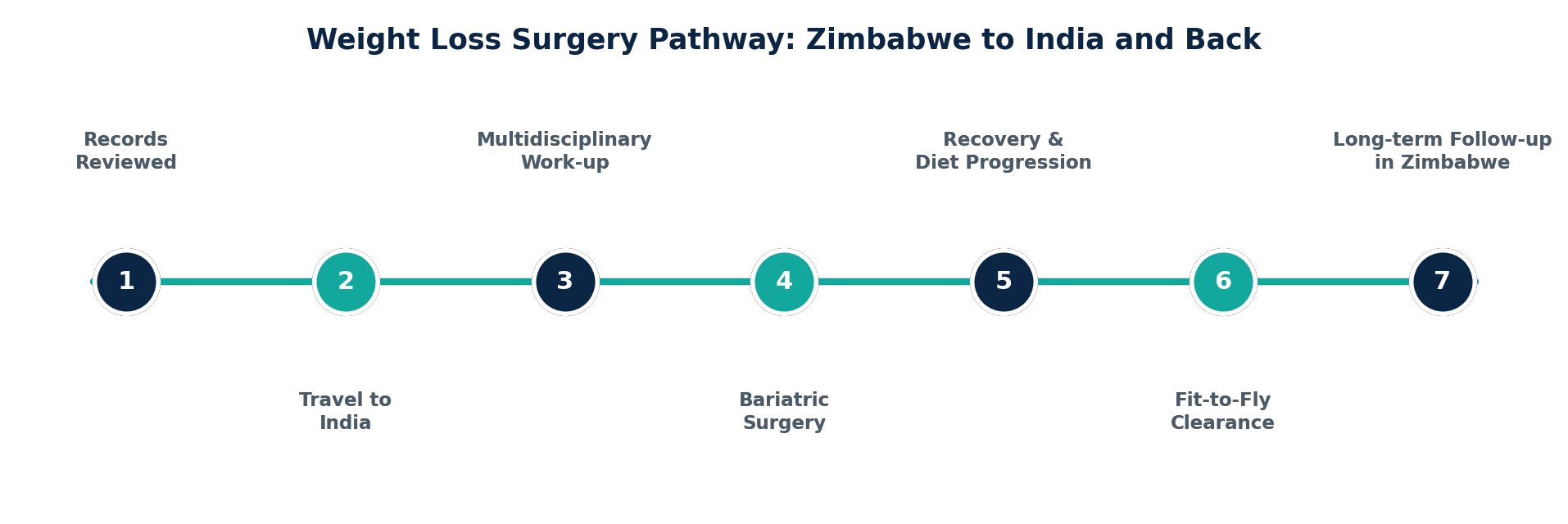
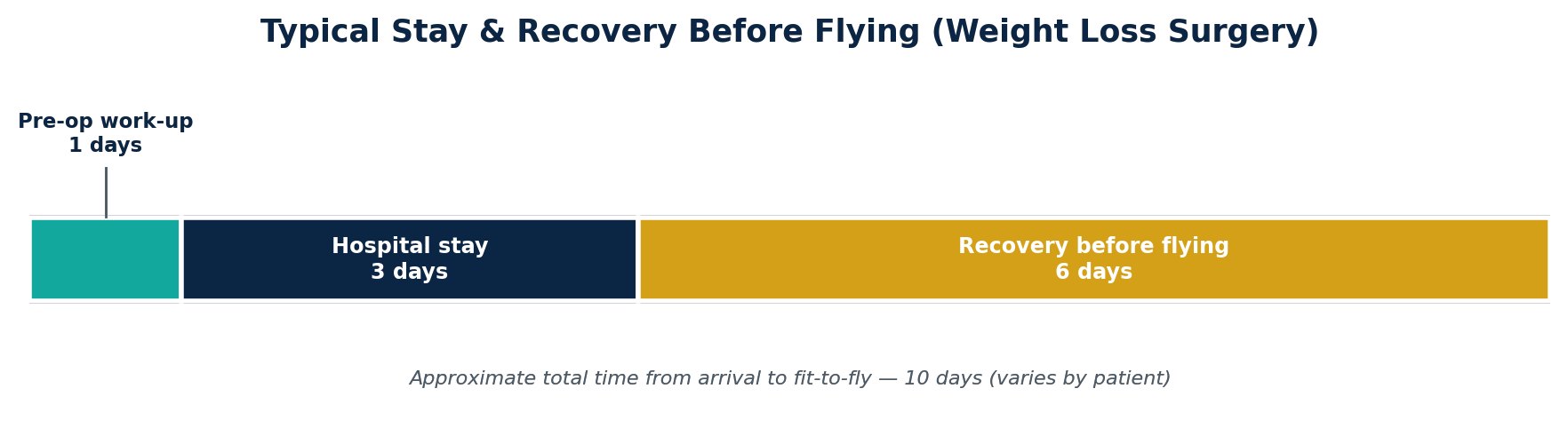
Most patients can travel home within seven to ten days of laparoscopic weight loss surgery, once the surgical team has confirmed there are no early complications and the patient is tolerating the initial post-surgical diet. A Zimbabwe patient should confirm this timeline for their specific procedure before finalising travel plans.
15Flying Back to Zimbabwe After Weight Loss Surgery in India
- Fit-to-fly clearance from the treating surgeon
- Blood-clot prevention measures
- Hydration planning for the flight
- Dietary planning appropriate to the early post-surgical stage
- Medication and supplement timing
- Compression stockings if advised
Patients recovering from bariatric surgery have an elevated blood-clot risk during long flights, and specific precautions should be discussed with the surgical team before travel.
16Medical Records Zimbabwe Patients Should Take Home from India
- Discharge summary
- Operative report, including the specific procedure performed
- Dietary progression plan
- Vitamin and mineral supplementation regimen
- Baseline post-surgical blood test results
- Medication list
- Follow-up and monitoring schedule
- Emergency warning signs specific to the procedure performed
- Treating surgeon’s contact/follow-up pathway
17Follow-Up in Zimbabwe After Weight Loss Surgery in India
- Regular blood tests to monitor for nutritional deficiencies
- Dietary and nutritional follow-up, ideally with a dietitian familiar with bariatric surgery
- Wound assessment
- Coordination with a local doctor for ongoing management of obesity-related conditions such as diabetes or high blood pressure, which may need medication adjustment as weight decreases
- Long-term monitoring for weight regain or the need for revision surgery
- Psychological support where helpful
18How Successful Is This Surgery?
There is no meaningful single “success rate” for weight loss surgery, since outcomes depend on the specific procedure, starting weight, adherence to lifestyle changes, and individual metabolic factors. The amount and durability of weight loss varies considerably between patients and procedures, and long-term success depends heavily on sustained dietary and lifestyle changes after surgery, not the operation alone.
19Questions Zimbabwe Patients Should Ask Before Surgery in India
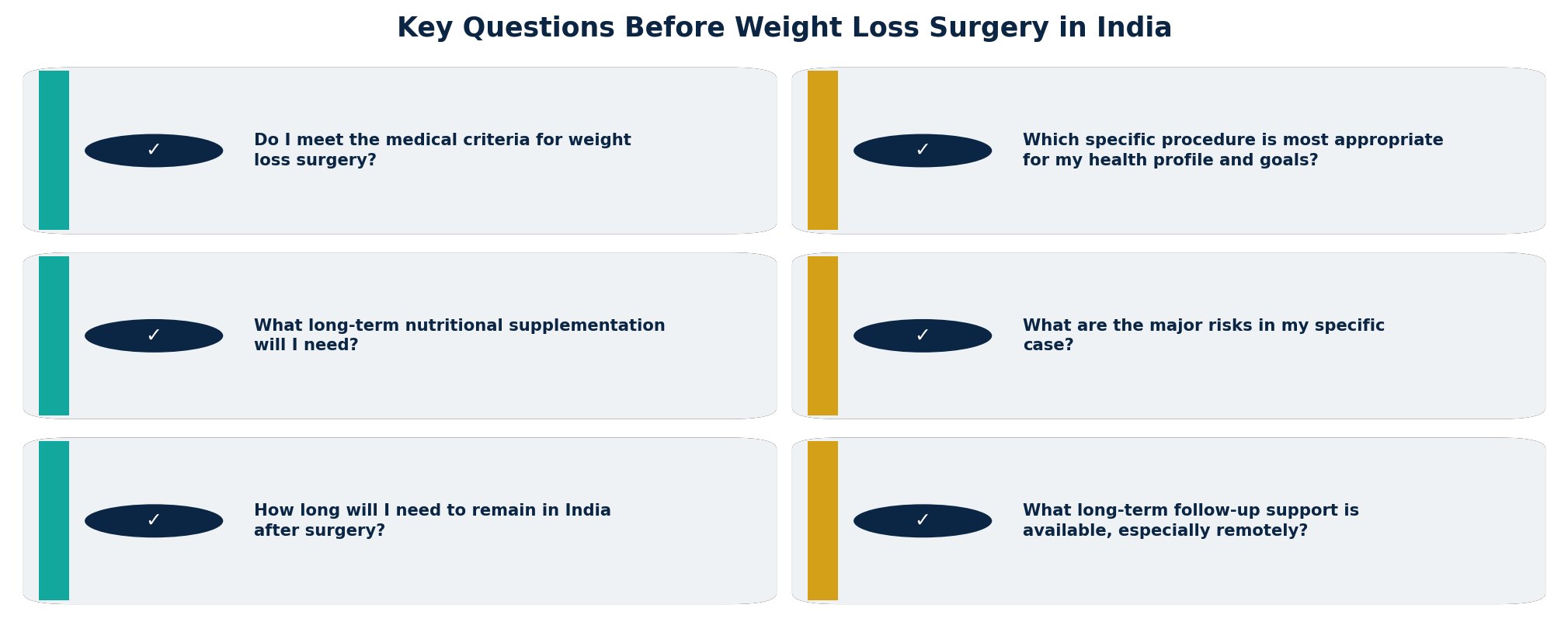
- Do I meet the medical criteria for weight loss surgery?
- Which specific procedure is most appropriate for my health profile and goals?
- What are the alternatives, including medical weight loss treatment?
- What are the major risks in my specific case?
- What long-term nutritional supplementation will I need?
- How much weight loss can I realistically expect, and over what timeframe?
- How long will I be in hospital, and how long in India afterward?
- When will I be fit to fly back to Zimbabwe?
- What long-term follow-up support is available, especially remotely?
- What happens if I do not achieve the expected weight loss, or if I regain weight?
Frequently Asked Questions About Weight Loss Surgery for Zimbabwe Patients in India
1Can I have a consultation before I travel from Zimbabwe to India?
Often, yes, for an initial discussion based on your medical history and BMI, though a definitive plan usually requires an in-person examination and further testing.
2Which weight loss procedure is best for Zimbabwe patients in India?
There is no single best procedure for everyone; the right choice depends on your BMI, related health conditions, eating habits, and personal preferences, and should be discussed in detail with a bariatric surgeon.
3Will Zimbabwe patients need to take supplements forever after surgery in India?
For most bariatric procedures, yes. Some degree of lifelong vitamin and mineral supplementation is standard, particularly after gastric bypass.
4How much weight can Zimbabwe patients lose after surgery in India?
This varies by procedure and individual factors; your surgical team can provide realistic expected ranges based on your starting weight and the specific procedure.
5How soon can I fly back to Zimbabwe after weight loss surgery in India?
There is no universal timeframe. Your surgeon should clear you for travel based on wound healing and absence of early complications.
6What if a Zimbabwe patient regains weight after surgery in India?
Some weight regain is common over time; discuss in advance what support, including possible revision surgery, would be available if this occurs.
7Can a local doctor in Zimbabwe manage follow-up care after surgery in India?
Often yes for routine monitoring, though specialist bariatric follow-up, including nutritional monitoring, is important and should be coordinated with the Indian team.
8Should Zimbabwe patients choose a surgeon in India based on price alone?
No. Programme experience, the availability of structured long-term nutritional support, and surgeon-specific outcomes matter more than price alone.
Key Takeaway for Zimbabwe Patients Planning Weight Loss Surgery in India
Travelling from Zimbabwe to India for weight loss surgery can offer good value, but the most important step is confirming that you genuinely meet the medical criteria for surgery and understanding which specific procedure fits your health profile and goals. For a Zimbabwe patient, the plan should also address recovery in India, the lifelong nutritional and lifestyle changes required, and a clear long-term follow-up pathway, including nutritional monitoring, once home.
- 1Bariatric Surgery — National Institute of Diabetes and Digestive and Kidney Diseases (NIH): https://www.niddk.nih.gov/health-information/weight-management/bariatric-surgery
- 2Weight loss surgery — NHS (UK National Health Service): https://www.nhs.uk/conditions/weight-loss-surgery/
- 3Bariatric Surgery Procedures — American Society for Metabolic and Bariatric Surgery: https://asmbs.org/patients/bariatric-surgery-procedures/
Citation Block: Zimbabwe Patients — Obesity and Weight Loss Surgery in India
| Field | Details |
|---|---|
| Topic | Obesity and weight loss surgery in India for Zimbabwe patients — clinical and surgical guide (Pillar Page 1) |
| Audience | Patients in Zimbabwe living with obesity and related health conditions who are considering bariatric surgery in India |
| Procedures covered | Sleeve gastrectomy, Roux-en-Y gastric bypass, mini gastric bypass, adjustable gastric banding and revision bariatric surgery |
| Typical hospital stay | 2–4 days after major weight loss surgery |
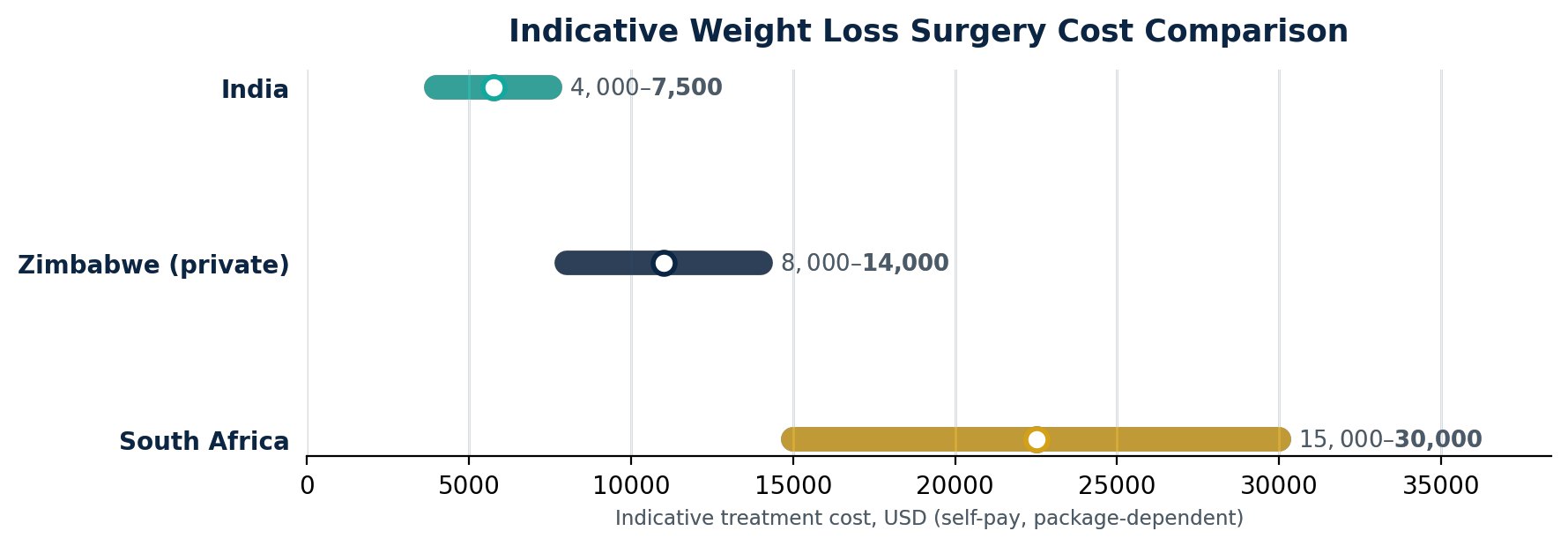
| Typical cost saving | 60–75% compared with South Africa, package-dependent |
| Tests before surgery | Comprehensive medical evaluation, endoscopy, nutritional and metabolic assessment, psychological evaluation, cardiac and sleep studies |
| Surgical approach | Mostly laparoscopic; open surgery may be needed in complex or revision cases |
| Recovery timeline | Initial recovery 2–4 weeks; full weight loss over 12–18 months with lifelong follow-up |
| Stay in India | Usually 7–10 days after laparoscopic weight loss surgery |
| Follow-up in Zimbabwe | Regular blood tests, bariatric dietitian follow-up, local doctor for diabetes or blood pressure, long-term monitoring |
Zimbabwe Patients — Ready to Take the First Step?
Share your medical reports, BMI and medical history from Zimbabwe with our team today and get a MEDICAL CONSULTATION, an honest view of whether surgery is right for you, an indicative cost estimate in US$ and complete support — from your flight out of Harare to your recovery in India and follow-up back home.